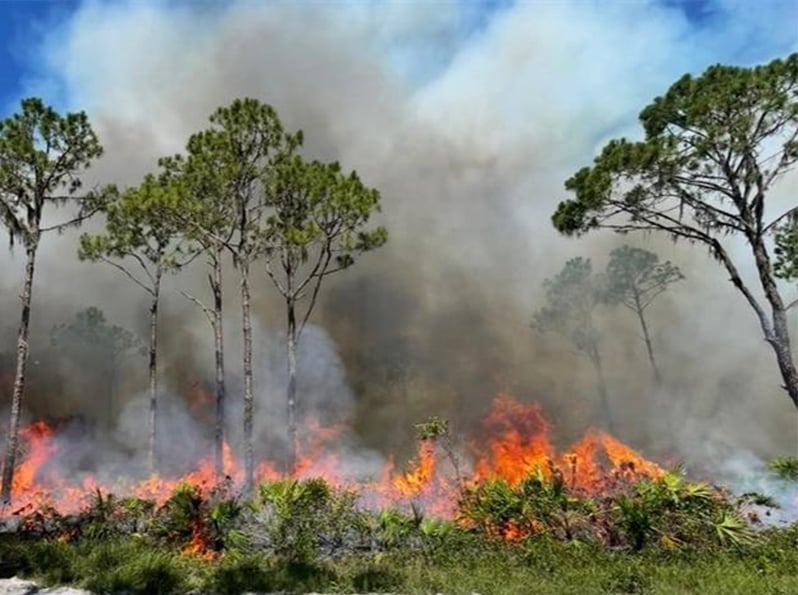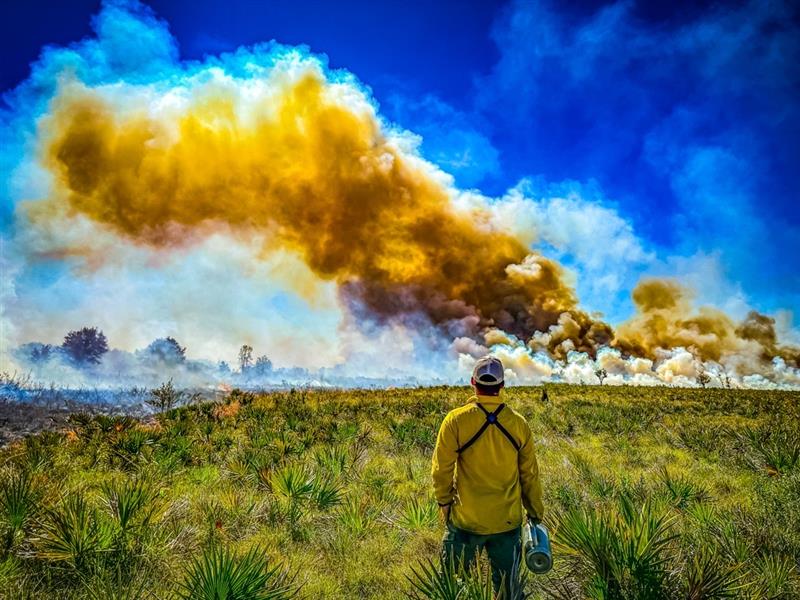
When used responsibly and under the right conditions, fire is one of our most effective tools for maintaining healthy natural lands.
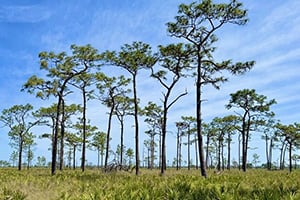
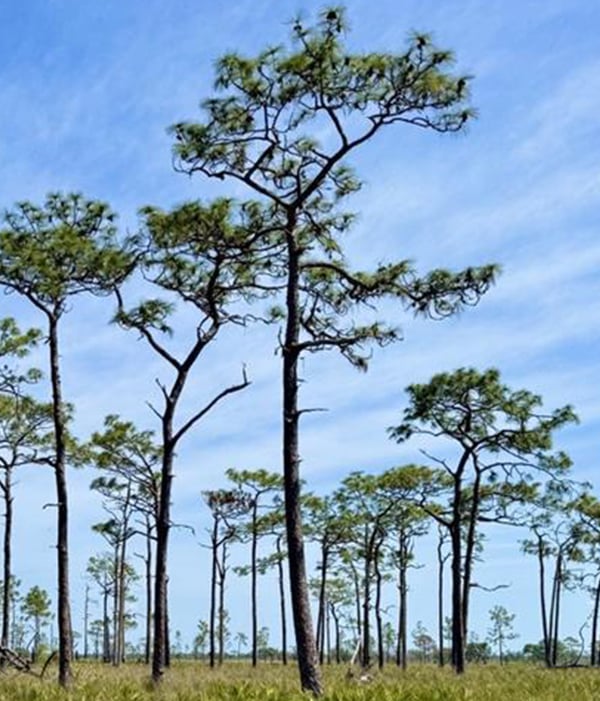
Florida is a fire-adapted landscape. For thousands of years, fire has helped shape many of the natural communities found throughout Florida. Lightning-sparked fires historically moved across pine flatwoods, prairies, scrub and other native habitats, creating a natural cycle of burning and regrowth.
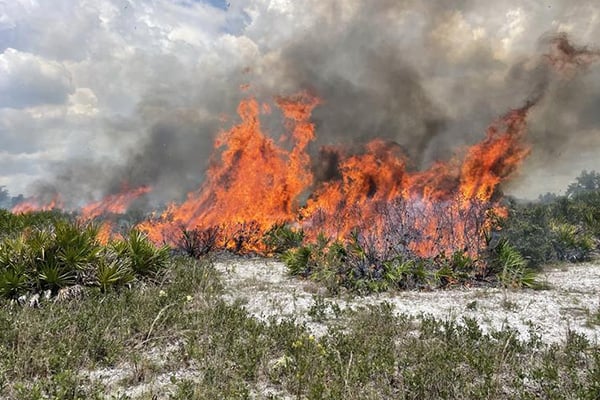
Plants and wildlife evolved alongside this cycle. Many of Florida's native ecosystems don't just tolerate fire, they depend on it. Today, Manatee County Natural Resources uses prescribed fire to carefully continue this important natural process to our preserves. A prescribed fire is a planned and carefully managed burn conducted under specific conditions to accomplish land management goals. Every burn conducted by the Natural Resources Department, is authorized by the Florida Forest Service.
An Important Tool for Managing Our Natural Lands
Prescribed fire is one of the most versatile and cost-effective land management tools available. Over time, dead leaves, grasses, branches and other vegetation can build up across the landscape. This material, known as fuel, can alter natural habitats and contribute to more intense and dangerous wildfires.
Prescribed fire helps reduce these hazardous fuel buildups while providing important benefits to the land.
In Manatee County's preserves, prescribed fire can help:
- Reduce hazardous vegetation and fuel buildup
- Maintain healthy, fire-dependent ecosystems
- Encourage the growth of native plants
- Recycle nutrients back into the soil
- Improve and maintain wildlife habitat
- Help manage unwanted vegetation
- Maintain open, diverse natural communities
- Protect rare and sensitive plant and animal species
- Reduce the risk and intensity of wildfires
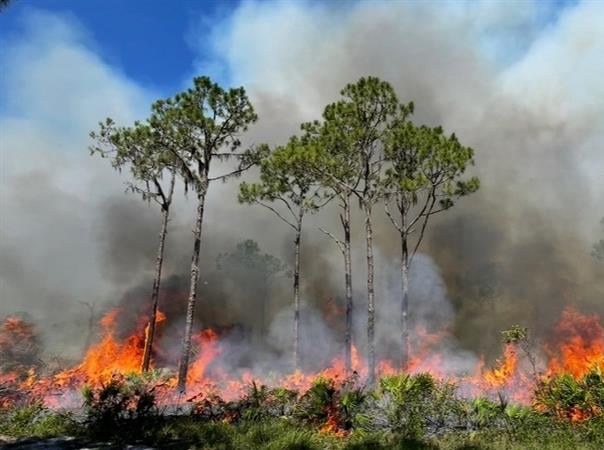
Every prescribed burn has a purpose. Fire is carefully used as a management tool to help maintain the natural landscapes, the plants and the wildlife that make Manatee County's natural areas unique.
What Does Fire Do for the Environment?
Fire Creates Opportunity for New Life
While a recently burned landscape may initially look blackened and lifeless, prescribed fire is often the beginning of an important period of renewal. Fire removes built-up vegetation, allowing sunlight to reach the ground and making space for new growth. It also returns nutrients to the soil and encourages the growth of native grasses, wildflowers and other plants. Natural fertilizer!
Following a burn, fresh vegetation can provide food and shelter for wildlife. Many native plants have adapted to Florida's natural fire cycle. Some species are stimulated to grow, flower or reproduce following fire, while other plants depend on the more open conditions that fire helps maintain.

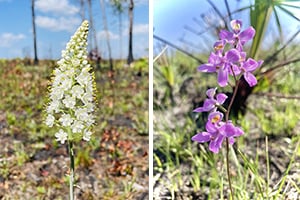
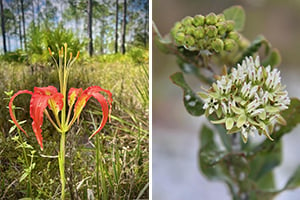
A few threatened species of flowers that depend on fire: Crow Poison, Manyflowered Grasspink, Pine Lily and Curtiss Milkweed.
(Photos courtesy of Mark Proch.)
Fire Benefits Wildlife, Too
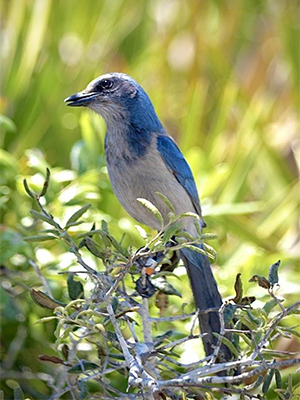
Healthy wildlife habitat isn't always dense and overgrown. Prescribed fire helps create a variety of conditions across the landscape, including areas of new growth, open ground and thicker vegetation. This diversity provides different types of food, cover and habitat for wildlife.
By maintaining healthy native ecosystems, the many species that call Manatee County’s preserves home benefit from prescribed fire.
Good Fire Helps Prevent Bad Fire
One of the most important benefits of prescribed fire is its role in reducing wildfire risk. When vegetation, dead leaves, branches and other fuels build up over time, uncontrolled wildfire has more material available to burn.
Prescribed fire reduces these fuels under carefully planned conditions. By reducing the amount of available fuel before a wildfire occurs, prescribed burns can help decrease wildfire intensity and create landscapes that are more manageable for firefighters.
This is especially important where natural lands and communities meet.
Prescribed fire is one part of helping protect People. Homes. Wildlife. Natural Lands. By proactively managing fuels in our preserves, Manatee County Natural Resources is working to maintain healthier ecosystems while helping reduce the risk of severe wildfires.
The goal is simple: use good fire, under the right conditions, to help reduce the potential for bad fire.
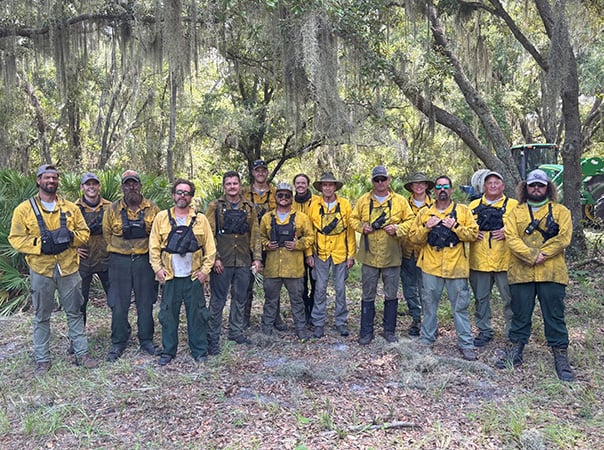
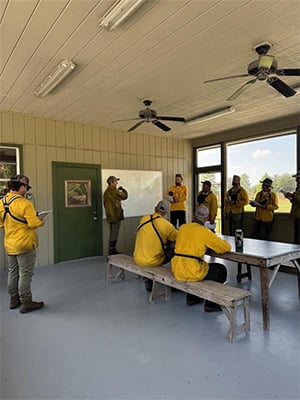
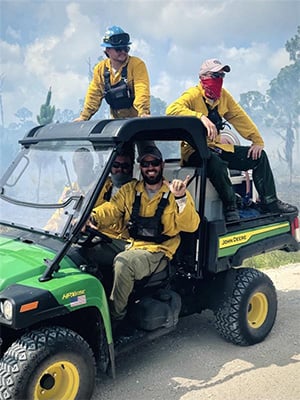
Planning. Preparation. Training. Monitoring. Teamwork. Behind every prescribed burn is a team of skilled professionals working to safely care for Manatee County's natural lands.
The People Behind the Fire
Meet Our Rangers and Land Management Teams
A prescribed fire doesn't simply happen because conditions look good outside. Before a burn begins, our trained rangers and land management professionals carefully plan, prepare and monitor every aspect of the operation. Conditions are constantly evaluated, including:
- Weather forecasts
- Temperature
- Relative humidity
- Wind speed and direction
- Fuel and vegetation conditions
- Smoke movement and dispersion
- Conditions surrounding the burn area
Prescribed burns are conducted only when conditions fall within carefully established parameters. The Florida Forest Service must first approve the burn before it happens. If conditions aren't right, the burn doesn't happen.
Our teams spend significant time preparing burn units, monitoring conditions and managing the fire once ignition begins. During the burn, crew remains on site, continuously watching conditions and adjusting operations as needed.
Conducting prescribed fire is demanding work. Our crew often work during some of the hottest parts of the year, when conditions may be appropriate for meeting specific management objectives.
Preparing for Burn Season
If you live near one of Manatee County's preserves or natural areas, you may occasionally see or smell smoke during prescribed fire operations. Smoke is a natural part of the process, and while every effort is made to conduct burns under conditions that minimize impacts to surrounding communities, smoke can travel beyond the boundaries of a preserve.
Here are a few ways you can prepare:
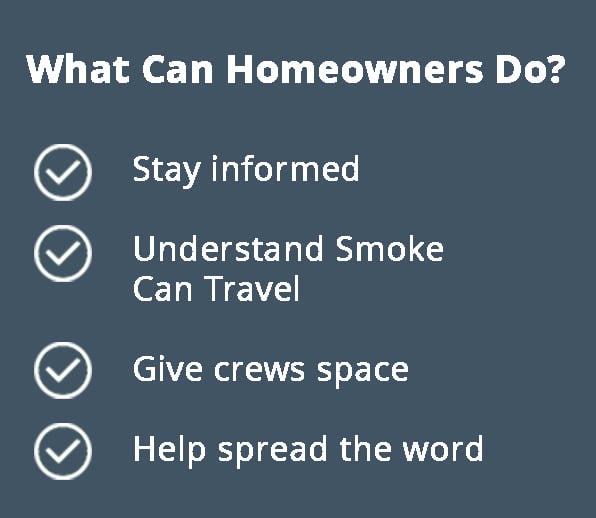
Stay Informed: Follow Manatee County’s social media pages for information about prescribed burns and preserve updates. Some areas, trails or preserves may temporarily close during burn operations for public and staff safety.
Understand That Smoke May Travel: Depending on weather and wind conditions, you may see or smell smoke in areas surrounding a prescribed burn. Keep windows and doors closed if smoke is affecting your home, and stay aware of changing conditions.
Give Crews Space: Never enter a closed preserve or burn area. Closures are in place to protect visitors and allow crews to safely conduct and monitor prescribed fire operations.
Help Spread the Word: Seeing smoke near a preserve doesn't always mean there is an emergency.
Prescribed fire is carefully planned and conducted by trained professionals under specific conditions. Help your neighbors understand why prescribed fires are taking place and how it benefits our community.
Fire Today. A Healthier Manatee Tomorrow.
Prescribed fire is about more than flames and smoke. It is about protecting and maintaining the natural lands that make Manatee County special.
- It helps native plants grow.
- It creates and improves wildlife habitat.
- It reduces hazardous fuel buildup.
- It helps protect our communities from severe wildfires.
For generations, fire has helped shape Florida's natural landscape. Today, Manatee County Natural Resources continues that cycle through carefully planned prescribed fire, helping ensure our preserves remain healthy, resilient and thriving for generations to come.
Manatee County proudly continues the tradition of keeping wild Florida alive!
FAQs
The answer depends on the species. Florida's wildlife has evolved alongside fire, and many animals have natural behaviors and adaptations that help them survive fire on the landscape.
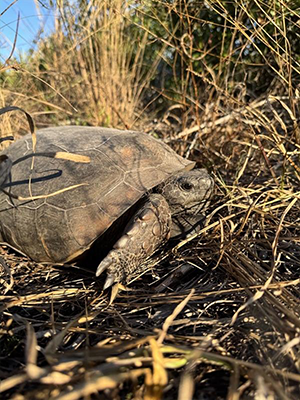
When a prescribed burn begins, many animals move away from the flames into nearby unburned areas. Others seek shelter in vegetation, beneath the soil or inside burrows. Gopher tortoises, for example, can retreat deep into their burrows, which provide important refuge during fire. Other animals may move into areas that have already burned, where the flames have passed and the ground is cooling.
Prescribed burns are also carefully planned with wildlife and habitat in mind. Our land management teams consider the habitat, time of year, weather conditions and specific management goals when determining how and when an area should be burned.