
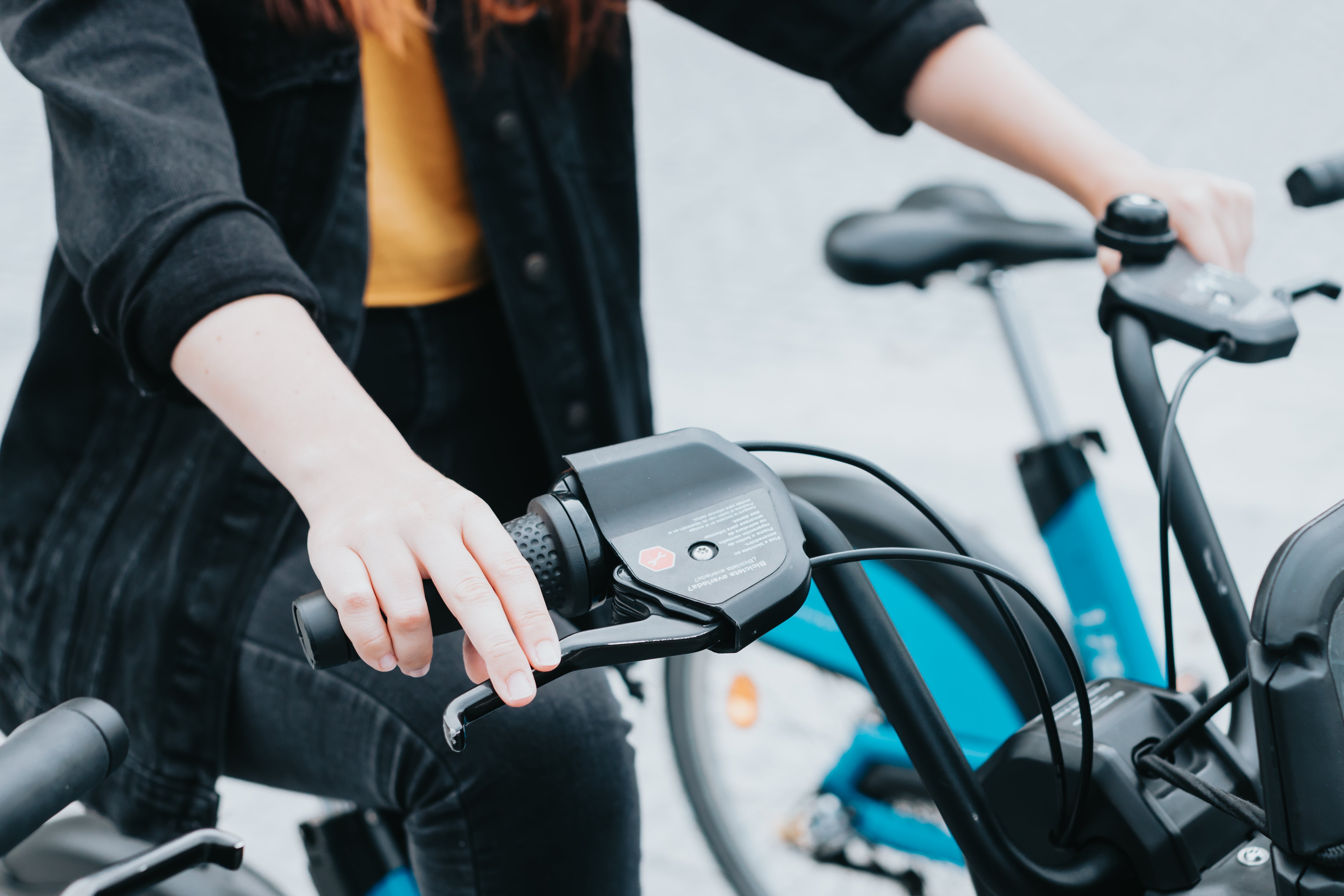
Using an electric bicycle is a great way to get around our County, but safety comes first. Whether you’re riding on the street, in a bike lane, or on the sidewalk, knowing the rules helps protect you and those around you. The County Commission recently passed a new ordinance on electric bikes. This guide highlights the basics so you can ride with confidence and respect others.
What is an Electric Bicycle?
Electric bicycle means, as set forth in Section 316.003(22), Florida Statuses, as may be amended, a bicycle or tricycle equipped with fully operable pedals, a seat or saddle for the use of the rider, and an electric mother of less than 750 watts which meets the requirements of one of the following three classifications:
- Class 1 electric bicycle – electric bike equipped with a motor that provides assistance only when the rider is pedaling and that ceases to provide assistance when electric bike reaches the speed of 20 miles per hour (MPH).
- Class 2 electric bicycle – electric bike equipped with a motor that may be used exclusively to proper the electric bike and that ceases to provide assistance when the electric bike reaches the speed of 20 MPH.
- Class 3 electric bicycle – electric bike equipped with a motor that provides assistance only when the rider is pedaling and that ceases to provide assistance when the electric bike reaches the speed of 28 MPH.
Before You Ride
- Operation of Class 3 electric bikes (ones that go up to 28 MPH) can only be operated by anyone over the age of 16 on roads, bike lanes/paths, or shared trails.
- Class 3 electric bike riders must use bike lanes/paths when available.
- Riding with kids 16 and younger? You can stay on the sidewalk to keep everyone together.
- Electric bikes over 750 watts are not allowed on sidewalks, bike paths/lanes, or shared pathways.
While You Ride
- Keep your speed at 15 MPH or less on sidewalks.
- Watch for pedestrians — they always have the right of way. Use your bell or voice to let them know you’re passing.
- Give space to people using wheelchairs or mobility devices.
At Intersections
- In the street or bike lane, stop at intersections without signs or signals. Let vehicles already in the intersection go first.
- On sidewalks, only cross when the “Walk” sign is showing. If there’s no walk signal, follow the traffic light for your direction.
Around School Buses
- If a school bus has its stop sign out, you must stop — even on a bike or electric bike.
- You don’t have to stop if you’re going the opposite way on a divided road with a median or barrier.
Stay safe. Ride Smart. Share the road.